DSN WIREFRI 18 SEP 20262012 UTC
Military / War
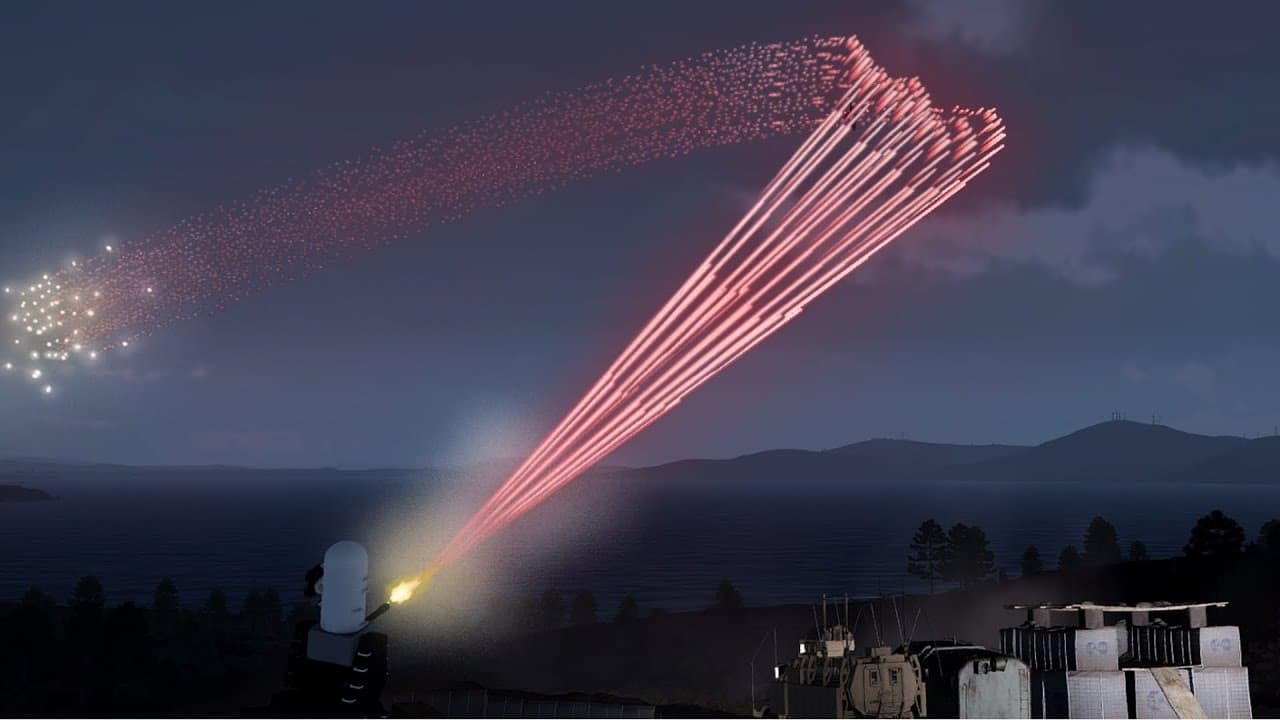
ANALYSISAmerican C-RAM (Counter-Rocket, Artillery and Mortar) Phalanx systems are firing streams of 20mm cannon rounds at Iranian attack drones over Erbil, Iraq tonight — July 19, 2026.
FILED 4 MIN READ
Erbil, Kurdistan Region, Iraq — July 19, 2026
The night sky over Erbil is alive with fire tonight. American C-RAM Phalanx cannons are engaging waves of incoming Iranian attack drones over the Kurdish capital of northern Iraq — filling the air with streams of 20mm tracer fire as the system's radar locks onto targets and opens fire autonomously at a rate of 4,500 rounds per minute.
American C-RAM systems continue to engage incoming Iranian attack drones with streams of 20mm Phalanx fire over the northern Iraqi city of Erbil tonight, OSINTtechnical confirmed on X, with footage verified by Reuters.
Security sources have reported multiple drone interceptions over Erbil in recent days, with coalition air defenses engaging explosive-laden drones targeting areas near US military facilities and the US Consulate. A US C-RAM air defense system intercepted an Iranian one-way attack drone over the US Consulate in Erbil, in Iraq's Kurdistan Region. According to reports, the drone was engaged before it could reach the diplomatic compound.
Repeated explosions, air-raid sirens and interceptions could at times be heard for more than two hours straight and were notably more sustained in intensity than previous strikes on Erbil.
There have been no immediate reports of casualties from the latest interceptions.
The Centurion C-RAM — Counter Rocket, Artillery and Mortar — was first deployed in Iraq in 2006 and is a land-based variant of the original Phalanx CIWS (Close In Weapon System) used by the US Navy since 1980.
The US Army's Counter-Rocket, Artillery and Mortar system has demonstrated consistent effectiveness in defending US facilities from Iranian-backed drone attacks. Designed as a last-line protection system, C-RAM uses radar-guided targeting and a high-rate-of-fire 20mm cannon to intercept incoming threats at close range, including low-flying unmanned aerial vehicles and loitering munitions. Its rapid engagement cycle and precision tracking have proven particularly valuable in dense urban environments where reaction time and minimized collateral risk are critical.
Technically, the US C-RAM air defense system combines the AN/TPQ-36 or AN/TPQ-53 radar for threat detection and tracking with the Phalanx Block 1B gun system, which fires 20mm M940 High Explosive Incendiary Tracer rounds at up to 4,500 rounds per minute. The system can autonomously detect, track and engage incoming threats within seconds, making it particularly effective against short-range, time-compressed attacks. Its electro-optical sensor suite further enhances target discrimination.
The honest answer is: sometimes. But not always.
This video, labeled "CRAM engaging incoming Iranian drones over Erbil, Iraq, earlier tonight" shows streams of fire with no obvious hits. Another, shot in Syria, shows a 4-second burst with no confirmed outcome. Another showing the US Embassy in Baghdad shows a 6-second burst snaking across the sky with no visible hits. A hit on a drone may not be visible in the night sky, as they do not necessarily explode when hit.
The C-RAM is not a magic wand to make all drones disappear, and some Shaheds are getting through. A closer look at videos of these weapons in action gives a fuller picture of what is really happening — and the crucial role of ammunition supply.
The challenge is simple and brutal: Iran's Shahed-136 drones — the primary weapon being fired at Erbil tonight — fly at approximately 120 mph, relatively low and slow, but they come in swarms. The C-RAM must engage each drone individually. Each engagement consumes hundreds of rounds. Ammunition supply is finite. And Iran keeps sending more drones.
Erbil — the capital of Iraq's autonomous Kurdistan Region and home to US military personnel, diplomatic staff and contractors — has been one of the most persistently targeted cities in the 2026 Iran war.
On July 1 and 2, the IRGC hit a Kurdistan Freedom Party camp near Erbil in Iraq's Kurdistan region with two ballistic missiles and two drones. On July 3, the IRGC struck camps belonging to at least two other Iranian dissident Kurdish parties in Iraqi Kurdistan with missiles, rockets and drones within a 48-hour period.
The pattern is consistent with Iran's broader strategy throughout the 2026 war — using Erbil as a proxy battlefield to strike at both American military assets and Iranian Kurdish dissident groups that Iran accuses of operating from Iraqi soil.
Tonight's drone attack on Erbil is part of the seventh consecutive day of US-Iran military exchanges — a cycle of attack and retaliation that has shown no sign of breaking since the US resumed large-scale strikes on Iran on July 8.
The US has struck Iran for seven consecutive nights. Iran has retaliated against US forces and Gulf allies every night in response. Erbil, Baghdad, Kuwait City, Abu Dhabi, Bahrain and Doha have all experienced Iranian drone and missile attacks within the past 72 hours.
The C-RAM systems over Erbil tonight are the most visual and visceral expression of that cycle — American technology firing thousands of rounds per minute to stop Iranian drones, in the skies above an Iraqi city of 1.5 million people, on the seventh consecutive night of a war that neither side has found a way to end.
DeSanta News will continue to follow the situation in Erbil and across the Middle East throughout the night.
Subscribe to get the latest articles delivered to your inbox.
No comments yet. Be the first to share your thoughts.
Military / War
Military / War
Military / War