DSN WIRESUN 11 OCT 20260342 UTC
Military / War
ANALYSISIran has struck Israel's Haifa oil refinery in direct retaliation for Israeli attacks on Tehran's fuel depots....
FILED 5 MIN READ
Haifa, Israel / Tehran, Iran — 2026
There is a pattern to this war that has become impossible to ignore. Israel strikes Iranian oil facilities. Within 24 hours, Iran strikes Israeli oil facilities. Iran strikes Israeli refineries. Within 24 hours, Israel strikes more Iranian fuel depots. Back and forth. Black smoke over Tehran. Black smoke over Haifa. The energy infrastructure of two nations being systematically destroyed in cycles of retaliation that neither side can — or will — stop.
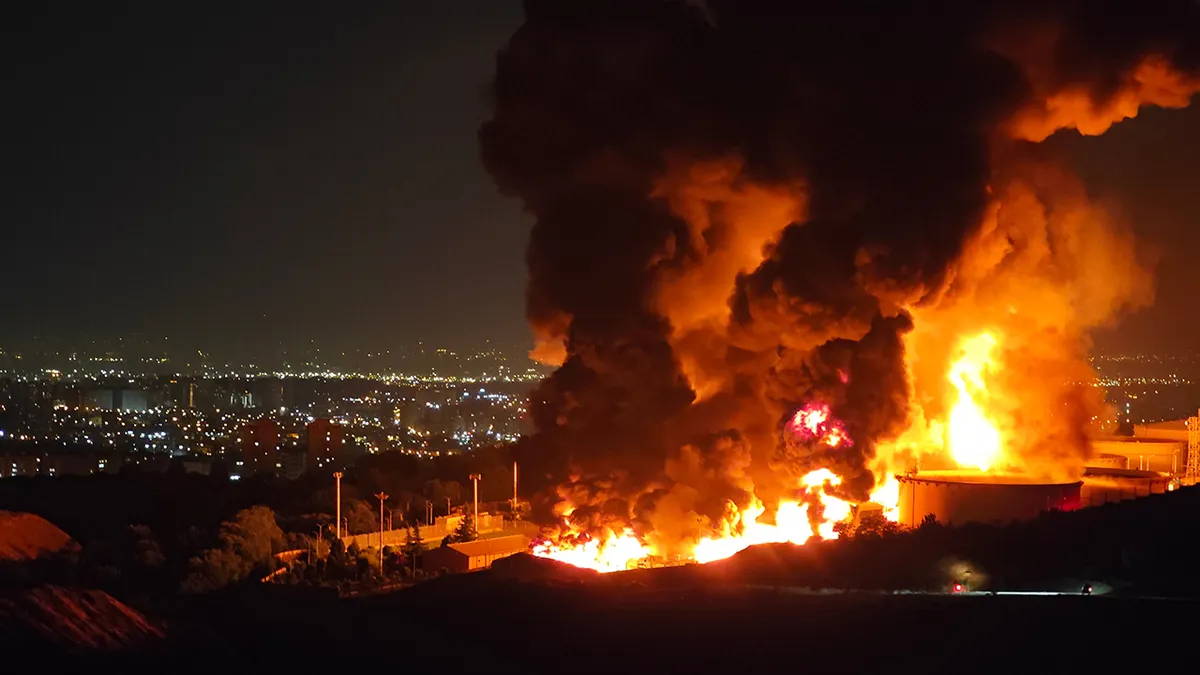
Thick smoke filled the sky over Tehran after Israeli air strikes hit Iran's oil facilities. The strikes sparked large fires as they hit four oil storage facilities and an oil production transfer centre in Tehran and the province of Alborz. The Aghdasieh oil warehouse in northeast Tehran, the Tehran refinery in the south, the Shahran oil depot in the west of Tehran, and an oil depot in Karaj city were the facilities targeted. Witnesses said oil from the Shahran depot had leaked into the streets. At least four tanker drivers were killed in the attacks in Tehran and Alborz.
Iran's capital was engulfed in a cloud of toxic smoke that unleashed black rainfall dozens of miles away after overnight Israeli strikes on several fuel depots caused fires to burn for hours. Images from Tehran, a city of nearly 10 million people, showed thick black smoke from the fires hanging over it, while residents reported difficulty breathing and oil-tainted rainfall staining everything around them.
The destruction forced the Iranian Ministry of Petroleum to slash daily fuel rations for civilians from 30 litres to 20 litres. At least four employees, including two tanker drivers, were killed in the depot strikes.
Iran kept its promise. Within 24 hours of every Israeli strike on Iranian energy infrastructure, Iranian missiles found Israeli targets.
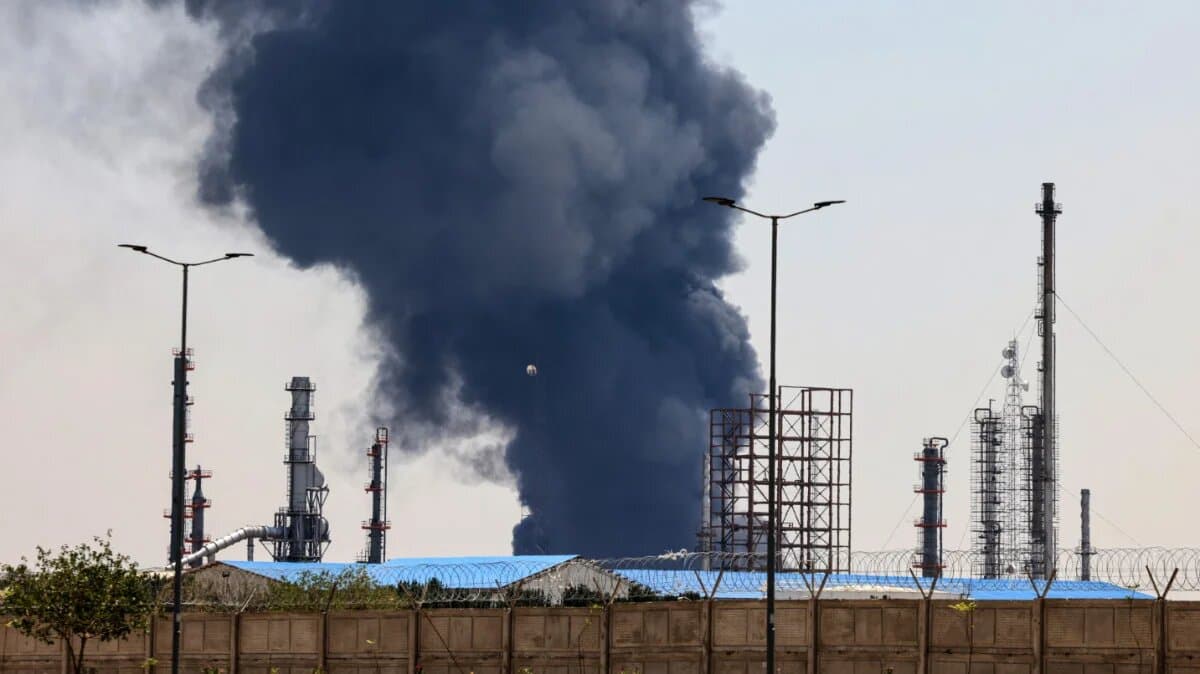
An Iranian missile attack hit Israel's Oil Refineries in the northern port city of Haifa. Energy Minister Eli Cohen said power was briefly disrupted. "The damage to the power grid in the north is localized and not significant," Cohen said. "Also, in the barrage towards the north, there was no significant damage to Israeli infrastructure sites."
Iranian attacks targeting large parts of Israel sent millions of people to shelters. The strikes caused damage to buildings. After the latest Iranian barrage, Israeli Energy Minister Eli Cohen said the electricity grid in northern Israel sustained some damage. He said crews had restored electricity to some areas and were working to restore it in others. Israeli media showed images of black smoke rising from an oil refinery in the northern city of Haifa.
The pattern of 24-hour retaliation was not accidental. It was announced in advance.
The spokesman for Iran's Khatam al-Anbiya headquarters, which oversees military operations, warned that if attacks on Iran's oil infrastructure continue, Tehran may respond with similar strikes across the region.
Israel struck 30 Iranian fuel depots on a single Saturday. The US had not been consulted on the full scope of the strikes. A U.S. official said the U.S. military was surprised by how wide-ranging they were. "We don't think it was a good idea," a senior U.S. official said. An Israeli official said the U.S. message to Israel was "WTF."
"The president doesn't like the attack. He wants to save the oil. He doesn't want to burn it. And it reminds people of higher gas prices," a Trump adviser told Axios.
Iran had warned. Israel struck anyway. Iran struck back — within 24 hours. The cycle locked in. And it has not broken since.
The systematic destruction of energy infrastructure on both sides of the Iran-Israel war is now one of the defining features of the 2026 conflict.
Israel and the US struck Iranian nuclear sites, oil storage facilities, fuel depots, refineries and gas fields across the country. Iran responded by striking the Haifa refinery, Israeli electricity grid infrastructure, fuel storage facilities and energy sites across Israel, Kuwait, Bahrain, the UAE, Saudi Arabia and Qatar.
Iran intensified attacks on Gulf energy sites after Israel struck its key South Pars gas field. Several waves of Iranian attacks targeted large parts of Israel.
Iran launched retaliatory missile and drone strikes targeting U.S. embassies, military installations, and oil infrastructure throughout the Middle East. The 2026 Iran war disrupted global travel and trade, halted flights in and out of the Middle East, and led to shipping reroutes to avoid the Strait of Hormuz and the Red Sea.
In Iran:
In Israel:
In Gulf States:
The systematic targeting of energy infrastructure across the Middle East's major oil-producing nations and transit corridors is having measurable consequences for the global economy.
Oil prices surged to $83.30 per barrel — the biggest single-day gain in six years — following escalation in the Strait of Hormuz. The Strait itself — through which 20% of the world's oil supply passes — has been declared closed by Iran on multiple occasions. Saudi Arabia's Aramco, Kuwait's KPC and Israel's Haifa refineries have all been struck in the same conflict.
When the world's most oil-rich region sets its own infrastructure on fire, everyone outside that region pays the price at the fuel pump.
The 24-hour retaliation cycle that has characterized the Iran-Israel oil infrastructure war shows no sign of breaking. Every Israeli strike on Iranian oil is followed within 24 hours by an Iranian strike on Israeli or Gulf oil. Every Iranian strike triggers a further Israeli or American response.
The United States and Iran signed a memorandum of understanding in June 2026 designed to end the war. The strikes on oil infrastructure have continued through and after that agreement. The ceasefire has collapsed. The oil facilities keep burning.
Tehran burned. Haifa burned. Kuwait's desalination plants burned. Saudi Arabia's Jazan refinery burned. The Strait of Hormuz has been declared closed.
And somewhere in Washington, Jerusalem and Tehran, decision-makers are trying to figure out how to end a war in which both sides have demonstrated — repeatedly and decisively — that they are willing and able to set each other's energy infrastructure on fire within 24 hours of any provocation.
DeSanta News will continue to follow the Iran-Israel oil infrastructure war and its global economic impact.
Subscribe to get the latest articles delivered to your inbox.
No comments yet. Be the first to share your thoughts.
Military / War

Military / War
Military / War