DSN WIRESUN 11 OCT 20260601 UTC
Military / War
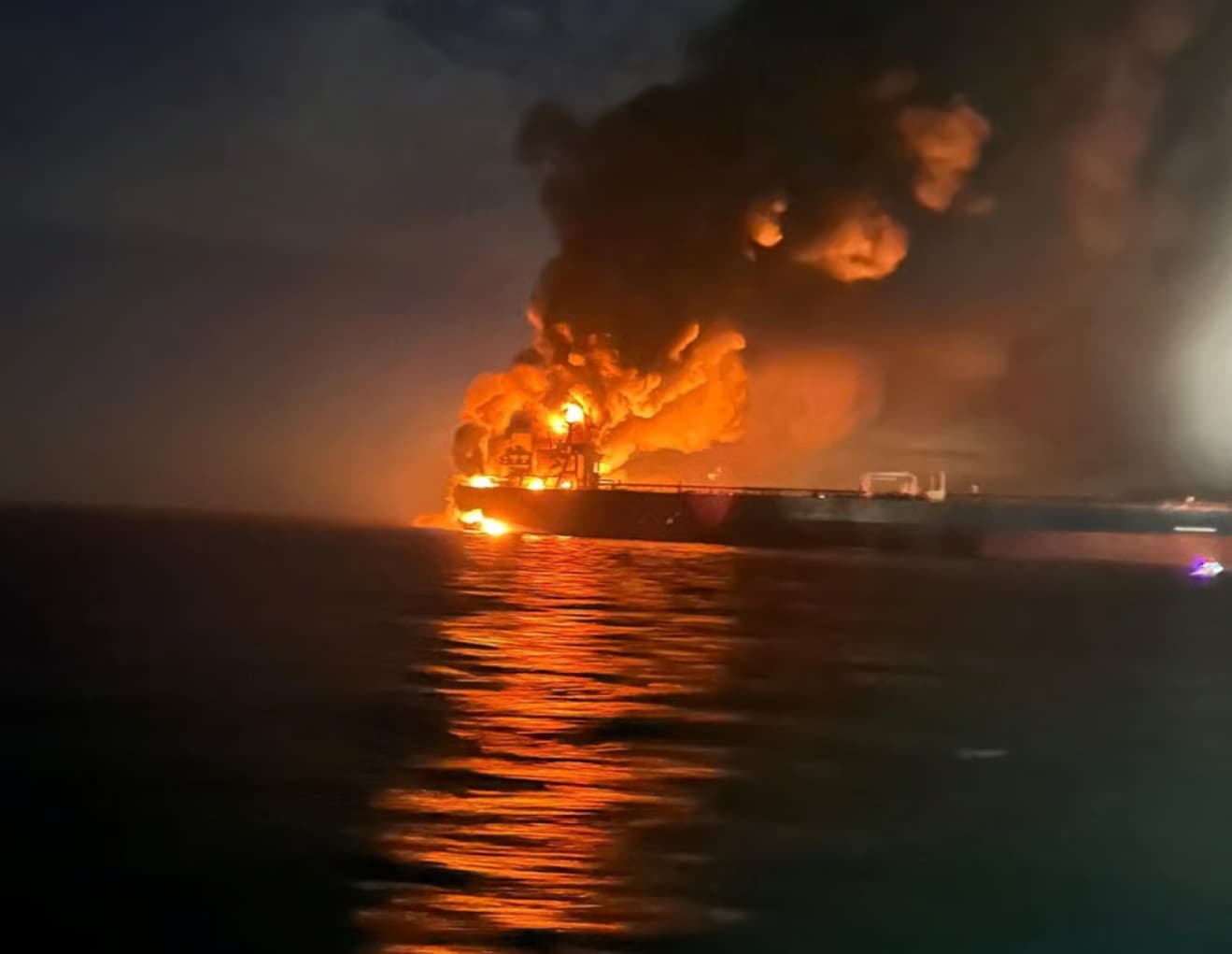
ANALYSISTwo Turkish-owned cargo ships — the Nadezhda and the Yasar — were struck by Ukrainian drones near the Russian port of Novorossiysk on August 3, 2026.
FILED 5 MIN READ
Black Sea / Novorossiysk — August 4, 2026
Ukraine's Black Sea maritime campaign has struck two Turkish-owned civilian cargo ships on the same evening — triggering a formal diplomatic protest from Ankara and raising urgent questions about the safety of commercial shipping in one of the world's most critical maritime corridors.
A Turkish-operated cargo ship was hit in an apparent Ukrainian drone attack off the Russian Black Sea port of Novorossiysk late on Monday August 3. According to Türkiye's Directorate General of Maritime Affairs, the Cameroon-flagged Nadezhda was sailing from Novorossiysk to the Turkish port of Samsun when it was attacked by drones.
The Ro-Ro cargo ship Nadezhda, carrying fruit and vegetables from the Turkish port of Samsun to the Russian port of Novorossiysk, was attacked about 20-30 nautical miles from its destination at around 4:30 p.m. local time on August 3.
The Nadezhda had a crew of 22, including 13 Turkish citizens. The ship sustained damage to its bow and living quarters. Russian vessels evacuated the crew from the damaged vessel.
The ship's captain, Yalcin Sahin, alleged that Ukraine carried out the strike and said six or seven drones were used. Sahin said everyone aboard was alive but that there were injuries. A personnel count was reportedly conducted after the attack, with all crew members accounted for and no one reported missing.
Four crew members were injured, including three Turkish nationals. Three crew members are in serious condition. The crew managed to begin extinguishing the blaze while Russian naval vessels were initially unable to reach the ship because of continued drone activity in the area.
The detail that Russian rescue vessels were unable to approach the stricken ship because Ukrainian drones remained active in the area is significant. It suggests Ukraine was conducting a sustained operation in the waters around Novorossiysk — not a single strike but a coordinated drone campaign that kept the area under sustained surveillance and threat for an extended period.
The Nadezhda was not the only Turkish vessel struck on Monday evening.
The Turkish Foreign Ministry said the civilian ships Yasar and Nadezhda were attacked after departing Novorossiysk on Monday evening, injuring several crew members including Turkish citizens.
Two Turkish-owned vessels struck in the same area on the same evening. The pattern strongly suggests a coordinated Ukrainian operation targeting ships in the approaches to Novorossiysk — Russia's largest Black Sea port and a critical hub for military and civilian supply chains.
Ankara reacted immediately and formally.
Turkey on Tuesday called on Russia and Ukraine to ensure the safety of commercial shipping in the Black Sea after two Turkish-owned cargo vessels were struck near the Russian port of Novorossiysk. The Turkish Foreign Ministry summoned the Ukrainian chargé d'affaires and expressed serious concern about the safety of Turkish-flagged or Turkish-crewed vessels in the Black Sea.
Turkey occupies an extraordinarily delicate diplomatic position in the Russia-Ukraine war. Ankara has maintained relations with both Kyiv and Moscow throughout the conflict — selling Bayraktar TB2 drones to Ukraine while maintaining Turkish Stream gas pipelines from Russia and refusing to impose Western sanctions on Moscow. Turkish vessels have continued to operate in the Black Sea throughout the war, supplying both Russian and other Black Sea ports with civilian goods.
The strikes on the Nadezhda and Yasar — Turkish-owned, Turkish-crewed vessels carrying civilian cargo — place that delicate balance under new strain. Ankara has now formally protested to both capitals.
Ukraine has not commented on the specific strikes on the Nadezhda and Yasar.
Ukraine's expanding maritime campaign in the Black Sea has been one of the most striking strategic developments of the 2026 war. Operation "Moscow Will Fall Because of Crimea" — launched on July 6 — has struck 183 vessels between July 1 and 20 alone, targeting Russia's shadow fleet oil tankers and dry cargo ships across the Black Sea and Sea of Azov.
The campaign has been specifically targeted at Russian-affiliated or Russian-directed shipping — shadow fleet tankers carrying sanctioned oil, cargo ships supplying occupied Crimea and military supply vessels. The targeting of Turkish civilian cargo ships carrying fruit and vegetables represents either an expansion of that targeting criteria or an error in target identification.
The attack comes amid an intensifying maritime campaign in the Russia-Ukraine conflict, with commercial shipping increasingly caught in the crossfire. In late July, Ukrainian forces struck an Iranian commercial vessel in the Caspian Sea near a Russian port, killing one crew member and injuring several others. Kyiv said the ship was transporting military-related cargo between Iran and Russia, while Tehran rejected the claim, describing it as a civilian vessel and condemning the attack.
The strikes on the Nadezhda and Yasar are the latest expression of a Black Sea maritime security crisis that has been escalating throughout 2026.
Russia has used maritime mines extensively in the Black Sea since 2022, endangering civilian shipping across the region. Ukraine has struck dozens of Russian naval vessels and launched maritime drone attacks on Crimean ports and Russian-flagged ships throughout the war. Both sides have attacked commercial shipping that they claimed was supporting the opposing war effort.
The cumulative effect is a Black Sea that is significantly more dangerous for civilian commercial shipping than it has been at any point since the Cold War. Insurance premiums for Black Sea voyages have surged. Some shipping companies have refused to send vessels into the region entirely. And now two Turkish cargo ships carrying fruit and vegetables have been struck by drones 20 nautical miles from a Russian port.
Turkey controls the Bosphorus and Dardanelles straits under the 1936 Montreux Convention — meaning it has the legal authority to close those straits to Russian warships, which it did at the start of the war in 2022. That decision effectively trapped the Russian Black Sea Fleet and prevented reinforcement from other fleets.
But Turkey has also continued to allow civilian shipping — including Turkish vessels — to operate in the Black Sea throughout the war. The strikes on the Nadezhda and Yasar test the limits of that policy and put pressure on Ankara to take a clearer position on the safety of its own citizens and commercial interests in the region.
DeSanta News will continue to follow the Black Sea maritime crisis and Turkey's diplomatic response.
Subscribe to get the latest articles delivered to your inbox.
No comments yet. Be the first to share your thoughts.
Military / War
Military / War

Military / War