DSN WIRESAT 19 SEP 20260013 UTC
Military / War
ANALYSIS50,000 people have returned from Ceuta to Morocco — greeted on arrival by Moroccan army units.
FILED 4 MIN READ
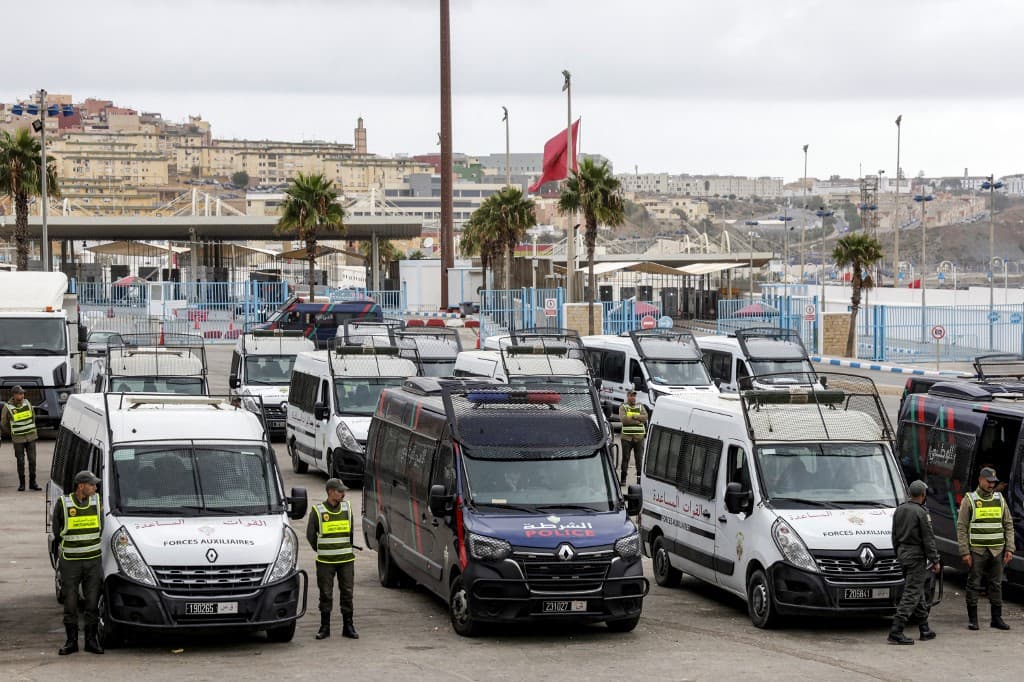
Ceuta / Fnideq, Morocco — August 1, 2026
Fifty thousand people are crossing back from Ceuta into Morocco this morning. And on the Moroccan side of the border, they are being met by Moroccan army units — organized, present and very much in control.
The same Moroccan security forces that, according to multiple monitoring sources and Spanish intelligence, were not present when those same 60,000 people crossed into Ceuta just 48 hours ago.
That detail — the army that disappeared when people were leaving and reappeared when people were returning — is the most revealing single fact of the entire Ceuta crisis.
Spain's interior ministry confirmed that the majority of those who entered the Spanish territory in North Africa have already returned to Morocco.
A handful of exhausted migrants who swam to Ceuta's urban Tarajal beach Saturday morning were met by soldiers who escorted them back across the border.
The return is being managed. Organized. Supervised. Moroccan army units are present at the crossing points, directing the flow of people back across the border with a discipline and capability that was entirely absent on Thursday evening when 60,000 people walked, swam and climbed their way into Spain.
The question that every European government is asking — and that Morocco has not answered — is a simple one.
Moroccan authorities withdrew their border guards shortly before the influx of migrants to Ceuta began, according to monitoring sources.
Spanish intelligence has confirmed it believes the surge was orchestrated by the Moroccan government on the orders of King Mohammed VI. The withdrawal of border personnel immediately before the crossing began is the most concrete operational evidence of that assessment. When 60,000 people cross a monitored international border in the space of 48 hours — in the same place, in organized waves, without the opposing country's security forces present — it does not happen by accident.
The initially limited response of Moroccan security forces in the 2021 Ceuta incident was widely interpreted in Spain as a form of diplomatic pressure.
Morocco has done this before. The 2021 Ceuta crisis — in which around 8,000 people crossed the border in two days — followed a diplomatic dispute between Spain and Morocco over Spain's hospitalization of Brahim Ghali, leader of the Western Sahara independence movement. When Spain did something Morocco did not like, Morocco opened the border. When the diplomatic message had been delivered, Morocco closed it again.
The pattern in 2026 is identical — but the scale is six times larger. 60,000 people instead of 8,000. 67 dead instead of 1. Cities looted. Emergency barriers rushed into place. Schengen suspended by Italy. France militarizing its border.
Whatever diplomatic message Morocco is sending this time, it has sent it loud enough for all of Europe to hear.
Spain says 50,000 migrants who entered its North African enclave of Ceuta have returned to Morocco.
The speed and scale of the return is as remarkable as the crossing itself. 60,000 people crossed into Ceuta between Thursday and Friday. By Saturday morning, 50,000 have already gone back. They crossed in organized waves. They returned in organized waves. They were welcomed back by the Moroccan army.
This is not what spontaneous, desperate migration looks like. Desperate migrants do not return voluntarily within 48 hours to the country they risked their lives to leave. They return when the door they were sent through has served its purpose and has been opened for them to go back.
The Ceuta crisis has exposed something that European governments have known for years but have been reluctant to say directly: that Morocco — a country the European Union funds and partners with specifically to control migration — can and does use migration as a weapon in diplomatic negotiations.
When Morocco wants to make a point to Spain, it opens the border. When the point has been made, it closes the border. The EU's migration partnership with Morocco gives Rabat enormous leverage over Europe's borders — leverage that King Mohammed VI has now demonstrated he is willing to use at unprecedented scale.
The European Commission's response — offering "operational support through Frontex" — is the institutional equivalent of noting that the house has burned down and offering to send firefighters.
Italy has suspended Schengen with Spain. France has deployed its military to its border. Spain's government is rushing emergency barriers into the sea. And on the Moroccan side of the border this morning, the army that wasn't there on Thursday is warmly welcoming everyone home.
The Ceuta crisis of July-August 2026 is not primarily a migration crisis. It is a sovereignty crisis. It is proof that an EU member state's border — a European Union external border — can be opened and closed by a neighboring country whenever that country chooses to make a political point.
Until Europe addresses that fundamental reality — not with Frontex officers and emergency barriers, but with the political and diplomatic tools needed to ensure that no country can weaponize migration against an EU member state — the Ceuta crisis of 2026 will not be the last of its kind.
It will be a dress rehearsal.
DeSanta News will continue to follow the Ceuta crisis and Europe's response throughout the weekend.
Subscribe to get the latest articles delivered to your inbox.
No comments yet. Be the first to share your thoughts.
Military / War

Military / War
Military / War