DSN WIRETHU 27 AUG 20260713 UTC
Military / War
EXPLAINERRussia attacked Kyiv overnight on August 4–5, 2026 with 4 Zircon/Oniks hypersonic missiles, 24 Iskander-M/S-400 ballistic missiles and 115 strike UAVs including Shahed drones, Gerbera loitering munitions, Italmas drones and Parodiya decoy drones.
FILED 5 MIN READ
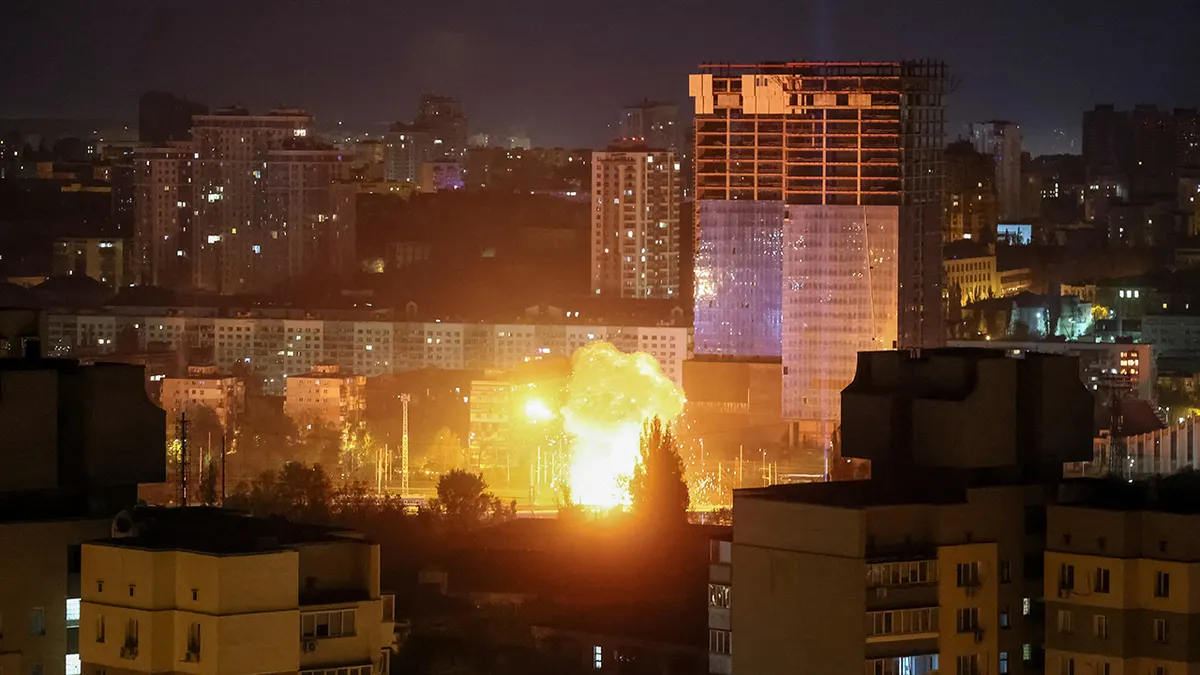
Kyiv, Ukraine — August 5, 2026
Last night, Russia fired some of the most sophisticated and deadly aerial weapons on earth at Ukraine's capital city. Ukraine's air defense fought back with everything it had. It stopped 98 drones. It stopped zero missiles. Seventeen people are dead. Here is a precise technical breakdown of what Russia used — and why Ukraine cannot currently stop it.
The Ukrainian Air Force released a full technical breakdown of the August 4–5 attack on Kyiv:
4 Zircon/Oniks missiles The 3M22 Zircon is Russia's most advanced hypersonic cruise missile — capable of traveling at approximately Mach 8 to Mach 9 (6,000–7,000 km/h) and maneuvering to evade interception. No current air defense system in Ukraine's arsenal can reliably intercept a Zircon. The Oniks (P-800) is a supersonic anti-ship missile adapted for land attack, traveling at approximately Mach 2.5. Both weapons represent the cutting edge of Russian missile technology.
24 Iskander-M/S-400 ballistic missiles The Iskander-M is Russia's primary short-range ballistic missile — launched from mobile transporter-erector-launchers, capable of carrying conventional or nuclear warheads and traveling at up to Mach 6-7. The S-400's 40N6 missile has also been adapted for surface-to-surface strikes. Ballistic missiles follow a parabolic trajectory at extreme altitudes and speeds — making them extremely difficult to intercept with anything other than a Patriot PAC-2 or PAC-3 system.
115 Strike UAVs including:
Ukraine's air defense shot down 98 of the 115 drones — an interception rate of approximately 85% against the drone threat.
Against the missile threat — 24 Iskander-M/S-400 ballistic missiles and 4 Zircon/Oniks hypersonic missiles — Ukraine's air defense achieved an interception rate of zero percent. Not a single missile was stopped.
The Ukrainian Air Force reported that air defense forces unfortunately failed to shoot down any Russian missiles overnight.
The only system in Ukraine's arsenal capable of intercepting Russian ballistic missiles is the US-made Patriot PAC-2/PAC-3 system. Ukraine has a small number of Patriot batteries — delivered incrementally by the United States and other allies — but critically insufficient interceptor missiles to sustain sustained operations against large ballistic missile barrages.
The depletion of Ukraine's Patriot interceptor stocks has been accelerated by two converging factors. First, Russia has dramatically increased the size and frequency of its ballistic missile attacks throughout 2026. Second, US Patriot interceptor production and stockpiles — already strained by Ukraine's needs — have been further depleted by the demands of the 2026 Iran war, where American forces have been firing Patriot missiles to defend Gulf states including Kuwait, Bahrain and the UAE from Iranian ballistic missile attacks.
The same missiles that could protect Kyiv are protecting Kuwait City and Abu Dhabi. There are not enough to do both simultaneously at the scale required.
The inclusion of "Parodiya" decoy drones in Russia's attack is a deliberate tactical decision designed to exploit exactly this shortage.
Parodiya drones are specifically engineered to mimic the radar signature of real Shahed strike drones — forcing Ukrainian air defense operators to decide, in real time and under extreme pressure, whether each contact is a real threat requiring an interceptor missile or a decoy. If they shoot at every contact, they exhaust their interceptors faster. If they don't shoot, real drones get through.
Russia uses decoys to drain Ukraine's air defense ammunition. Then it fires ballistic missiles into the gaps. The 115 UAVs — including decoys — served partly as a screen and a drain for the 28 ballistic and hypersonic missiles that followed.
Missile and drone impacts were recorded at 26 separate locations across Kyiv overnight — and debris fell at six additional locations, for a total of 32 sites across the capital affected by the attack.
The targets Russia's Defense Ministry claimed were military. The reality documented by Ukrainian emergency services and independent journalists on the ground tells a different story.
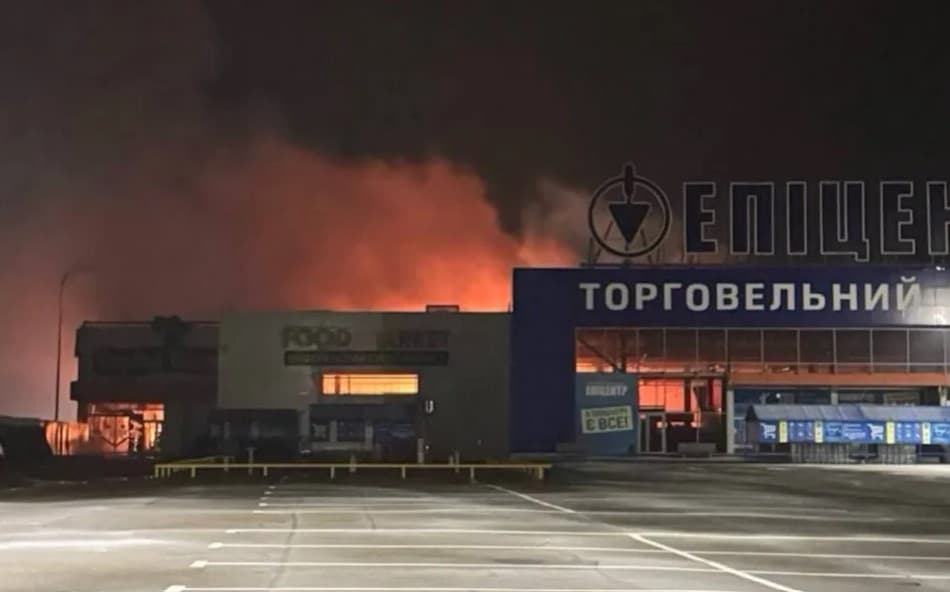
Warehouses belonging to civilian companies were destroyed including facilities operated by Epicentr — Ukraine's largest home improvement retailer — ROZETKA, Ukraine's largest e-commerce platform, Fozzy Group, one of Ukraine's largest food distributors, and Nova Poshta, Ukraine's primary parcel delivery service.
A brewing company was destroyed. A railway station was struck. Residential buildings were damaged in the Holosiivskyi, Obolonskyi, Desnianskyi and Sviatoshynskyi districts of Kyiv.
Seventeen people were killed in the attack. Forty-four were injured.
They were not soldiers. They were Kyiv residents — people sleeping in their apartments, working night shifts, starting their early morning routines — who were killed by weapons traveling at 6,000 kilometers per hour that Ukraine had no means to intercept.
Zelensky's message to the world the morning after was precise and devastating: "Ballistic missile interceptors — these are what could have saved the lives of those who died today. It is very important that our partners understand that delays in supplying them, or an unwillingness to provide anti-ballistic systems, lead directly to such horrific casualties and destruction."
Russia has now fired 24 ballistic missiles at Kyiv in a single night and suffered no interceptions. The tactical lesson Russia will draw from this is simple: ballistic missiles work. Ukraine cannot stop them. Fire more.
Until Ukraine's Patriot interceptor stockpiles are replenished — either from US production, from European allies or from any country willing to supply them — the people of Kyiv will continue to sleep knowing that Russia's ballistic missiles can reach their homes and there is nothing between them and the impact except luck.
DeSanta News will continue to follow the situation in Kyiv and Ukraine's air defense crisis.
Subscribe to get the latest articles delivered to your inbox.
No comments yet. Be the first to share your thoughts.
Military / War
Military / War
Military / War