DSN WIRESUN 11 OCT 20260355 UTC
World
ANALYSISA 7.4-magnitude earthquake — the strongest recorded in Colombia in the 21st century — struck western Colombia on August 10, 2026, killing at least 224.
FILED 5 MIN READ
Pereira / Cali / San José del Palmar, Colombia — August 10–11, 2026
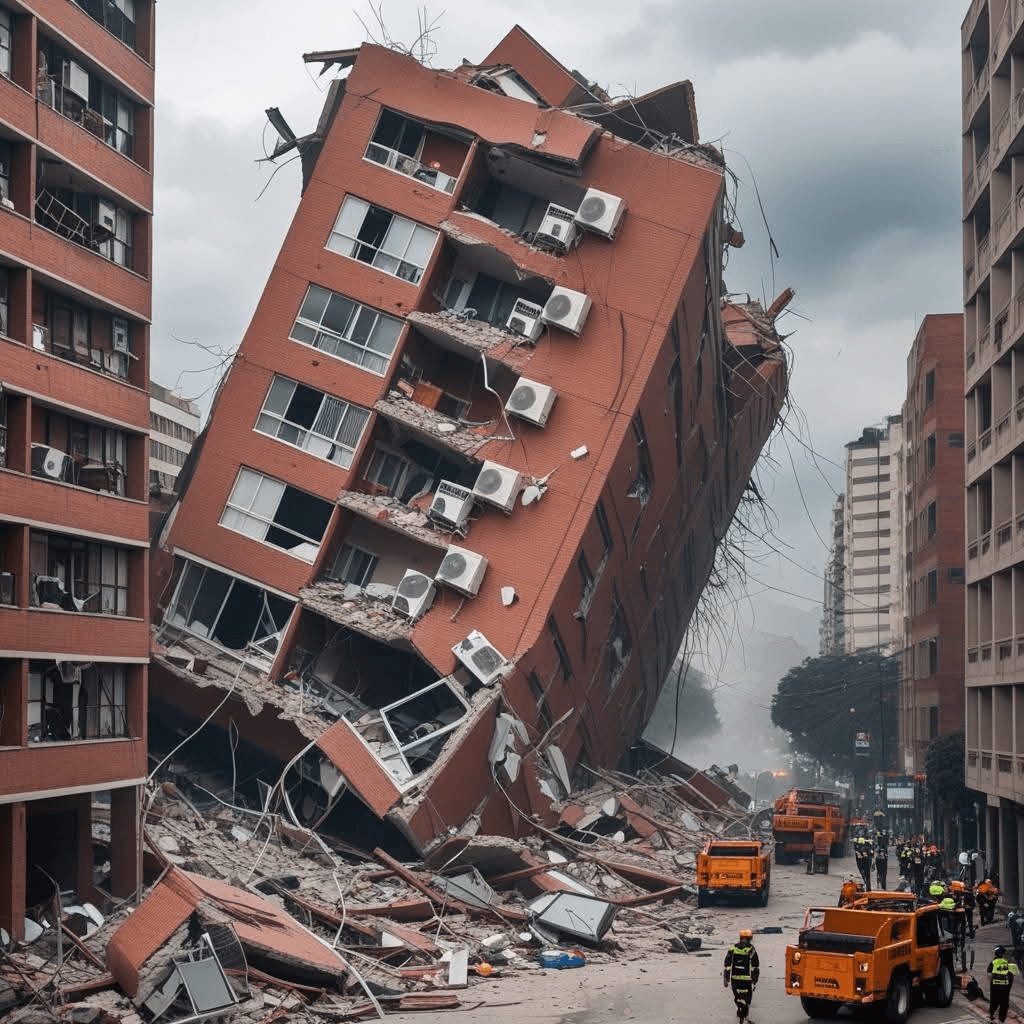
Colombia is in shock. The strongest earthquake recorded in the country in the 21st century struck western Colombia on Monday morning — killing at least 224 people, collapsing 86 buildings across multiple cities, leaving 188 people missing in Cali and trapping 16 people in a cable car for six hours as rescuers worked frantically to reach survivors buried under rubble.
At least 224 people were killed and dozens of buildings collapsed in cities across western Colombia after a powerful 7.4-magnitude earthquake struck the South American nation. The quake trapped residents under debris, leaving more injured and forcing people to evacuate their homes as far as the capital of Bogotá.
Colombia's Geological Service said Monday's quake was the country's strongest recorded "in the 21st century," and that it was followed by several aftershocks.
The epicenter was in San José del Palmar, a community of about 4,800 people in the Choco region about 250 miles west of Bogotá. The USGS said it struck at a depth of 66 miles. The quake was also felt in neighboring Ecuador and Panama, though minimal damage was reported there.
The most visceral images of the August 10 earthquake are those captured in the moments of building collapse — structures that had stood for years disintegrating in seconds as the earthquake shook western Colombia's foundations.
Videos geolocated by CNN show the moments several buildings in the Colombian city of Pereira collapsed during the deadly earthquake.
Concrete fell in enormous chunks. Entire facades detached from buildings and crashed onto streets below. People ran from structures as floors gave way beneath them and ceilings descended. The footage of a building literally crumbling as huge chunks of concrete fall near people running out has been shared millions of times across social media within hours of the disaster.
Five capital cities across the country are in a red alert, 86 buildings have collapsed and seven airports have suspended operations.
Around 1,600 buildings were damaged, including at least 61 that completely collapsed.
Local officials confirmed that at least 60 people had been killed in the city of Pereira, two in the city of Manizales, and 27 people in Valle del Cauca.
Pereira: The hardest-hit major city. 60 confirmed dead. Sixteen people were evacuated from an aerial cable car system in Pereira after being trapped for six hours. Schools, hospitals and apartment buildings suffered catastrophic structural failures. Emergency services were overwhelmed from the first minutes of the disaster.
Cali: At least 188 people are missing in Cali, the city's mayor said. Buildings collapsed across multiple neighborhoods as rescue teams moved from site to site in an effort to reach those trapped.
Bogotá: Colombia's capital — 400 kilometers from the epicenter — felt the earthquake strongly. The quake forced people to evacuate their homes as far as the capital of Bogotá.
San José del Palmar: The epicenter community of 4,800 people experienced catastrophic damage to local infrastructure.
The quake hit Colombia's so-called coffee axis, a mountainous, lush and culturally important region which helps to power Colombia's economy. The area was the site of another earthquake in 1999 which killed nearly 1,200 people.
The coffee axis — the Eje Cafetero — is one of Colombia's most economically and culturally vital regions, producing much of the country's famous coffee export crop and home to millions of Colombians across cities including Pereira, Armenia and Manizales. The region sits directly on the seismically active fault systems of the Pacific Ring of Fire — the same geological belt that has produced devastating earthquakes across South America, Central America and the western Pacific for centuries.
The 1999 Armenia earthquake — a 6.2 magnitude event — killed more than 1,100 people in the same region. Monday's earthquake measured 7.4 — significantly more powerful than 1999 — and has already surpassed that disaster's death toll.
Response to the earthquake presents the first major challenge for de la Espriella, a Trump ally who was sworn in as president over the weekend.
Colombia's newly inaugurated President Abelardo de la Espriella said Monday that he had personally taken charge of the government's response to the emergency in San José del Palmar. "You are not alone. The state is present and taking action," he said.
At least 224 people are dead after a 7.4-magnitude earthquake rocked western Colombia on Monday. Colombia's new president declared a national disaster.
President de la Espriella — who had been sworn in just days before the earthquake — faced the defining moment of his early presidency within hours of taking office. His personal involvement in coordinating the response and immediate declaration of national disaster have been welcomed by Colombian emergency management officials as essential steps in mobilizing federal resources for the affected region.
On Monday night, the US State Department announced it would provide $15.5 million for emergency response efforts.
The United States' immediate commitment of $15.5 million in emergency aid reflects both the scale of the disaster and the close relationship between the Trump administration and Colombia's new president. Additional international assistance is expected to be announced as the full extent of the damage becomes clear.
The USGS issued a post-earthquake assessment warning that significant aftershocks should be expected in the coming days and weeks — a warning that adds urgency to rescue operations currently underway across western Colombia.
For rescue teams working inside damaged and partially collapsed buildings, every aftershock represents a life-threatening risk. In earthquakes of this magnitude, it is standard for the main shock to be followed by aftershocks capable of bringing down already-weakened structures — killing both survivors trapped in rubble and the rescuers working to reach them.
Small earthquakes, known as "temblores," are common in central and western Colombia, but those above 6.0 magnitude are rare.
For Colombians, earthquakes are a constant background presence of life in the western part of the country. Every child learns earthquake safety. Every building is theoretically constructed to earthquake standards. And yet, when a 7.4-magnitude earthquake strikes — the strongest in the country's modern recorded history — buildings crumble, families are buried and rescue teams are overwhelmed by the scale of what they face.
224 people are dead. 570 are injured. 188 are missing in Cali alone. 86 buildings have collapsed. And the aftershocks are still coming.
DeSanta News will continue to follow the Colombia earthquake as rescue operations continue and the death toll is updated.
Subscribe to get the latest articles delivered to your inbox.
No comments yet. Be the first to share your thoughts.
World
World
World