DSN WIRESUN 11 OCT 20260337 UTC
World
ANALYSISTwo weeks after 60,000 people crossed into Ceuta in 48 hours, killing 67, looting shops and burning cars — the Spanish enclave is still not back to normal.
FILED 5 MIN READ
Ceuta, Spain — August 12, 2026
Two weeks ago, Pedro Sánchez stood in front of cameras in Ceuta and said his government was "mobilising all available resources." He called the situation "unexpected." He declared the border would be defended "as if it were Madrid."
Two weeks later, Ceuta is still not normal. The shops that were looted are still boarding up. The businesses that were burned are still being cleared. The emergency barriers rushed into the sea are still being constructed. And new reporting has confirmed what the opposition has been saying since day one: the Spanish government knew this was coming — and chose not to act.
New information from several military and civilian intelligence sources suggests that the Spanish government had advance warning of the risk of a mass arrival of migrants in the North African enclave of Ceuta days before the crisis erupted. Intelligence alerts were issued over several days, including in the hours immediately before tens of thousands of people crossed from Morocco.
Intelligence services warned that King Mohammed VI was likely to make a "gesture of magnanimity" at the border to coincide with Morocco's Throne Day celebrations — the same annual event that has historically been used as an occasion for diplomatic signaling through migration pressure.
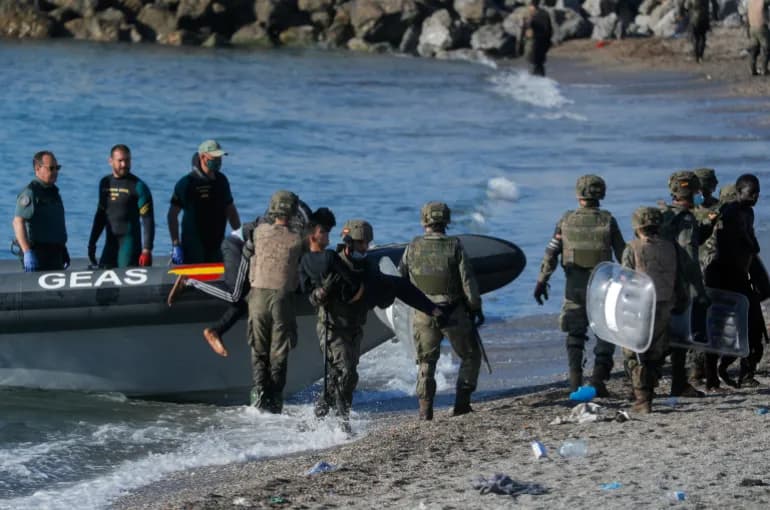
Despite repeated warnings from intelligence agencies, the Ministry of the Interior did not order the deployment of reinforcements until late Thursday — when the crisis had already exploded. Military units in both Ceuta and Melilla were on standby but were not activated. The reinforcement ultimately sent resulted in about thirty additional officers and a boat — that broke down.
Thirty officers and a boat that broke down. For a crisis that brought 60,000 people across the border in 48 hours.
When Sánchez visited Ceuta on Friday July 31, he said: "Last year, a reduction of illegal immigration was recorded of around 40 percent; therefore, what happened yesterday breaks with a pattern we had seen consistently, which was reducing illegal flows of migration. This situation is unexpected."
His own intelligence services had warned him it was coming. His own military had units on standby waiting for the order that never came. And the Prime Minister of Spain stood in front of cameras and called it unexpected.
The leader of the Popular Party Alberto Núñez Feijóo warned that the Spanish government had been aware of the risk since the previous Monday — four days before the crisis began. He was in Ceuta, speaking publicly, while Sanchez was still calling it unexpected.
When the intelligence failure became undeniable, Sánchez pivoted to a new explanation. He told media that the influx of migrants was caused by trafficking mafias spreading rumours about a Spanish Supreme Court ruling.
"What has emerged from our talks with Moroccan authorities is that trafficking mafias took a self-serving interpretation of a Supreme Court ruling," he said. "That interpretation spread like wildfire in recent hours."
Ceuta authorities had linked the surge in attempted crossings to a Spanish Supreme Court ruling earlier that month that barred authorities from immediately returning migrants who arrive by sea without due process. The ruling does not apply to migrants who enter Spain by land.
The mafia explanation and the court ruling explanation have two significant problems. First, Spanish intelligence had warned specifically of a coordinated border opening tied to Morocco's Throne Day — not a spontaneous reaction to legal rumours. Second, 60,000 people coordinating a border crossing based on legal rumours spreading "like wildfire" in a matter of days does not describe spontaneous migration. It describes an organized operation.
The Spanish government declared the situation under control, with the army mobilized in the region and the installation of a 500-meter floating barrier off its border with Morocco — measures that should have been in place before the crisis, not rushed into place after it.
Sánchez's interior minister Fernando Grande-Marlaska reinforced border security as arrivals by sea increased. That reinforcement resulted in thirty additional officers and a boat that broke down a few days later.
Sánchez also insisted that Moroccan authorities had cooperated "swiftly and consistently" from the outset — a claim that conflicts directly with reporting that Moroccan border guards withdrew from the crossing points shortly before the surge began and reappeared to welcome returnees 48 hours later.
What started as a moderate increase in the number of border crossings at Ceuta turned into an open crisis on Thursday. Nearly 60,000 crossed the border in a matter of days. Authorities reported at least 67 people died, most drowned as they tried to swim around a breakwater. Sánchez, who for years has championed a pro-immigration platform, now faces his biggest political challenge.
The political damage to Sánchez is severe and continuing. The Spanish right — including the People's Party and the far-right Vox — have unified around a single demand: the Prime Minister must resign. His immigration policy, they argue, created the conditions for the crisis. His intelligence failure allowed it to happen. His response was inadequate. And his public explanation was demonstrably false.
Internationally, the Ceuta crisis has damaged Spain's standing in Europe at a moment when migration is the defining political issue across the continent. Italy suspended Schengen with Spain. France deployed its military to the border. Germany demanded answers. And the European Commission — while carefully avoiding direct criticism of Sánchez — described the situation as "unacceptable."
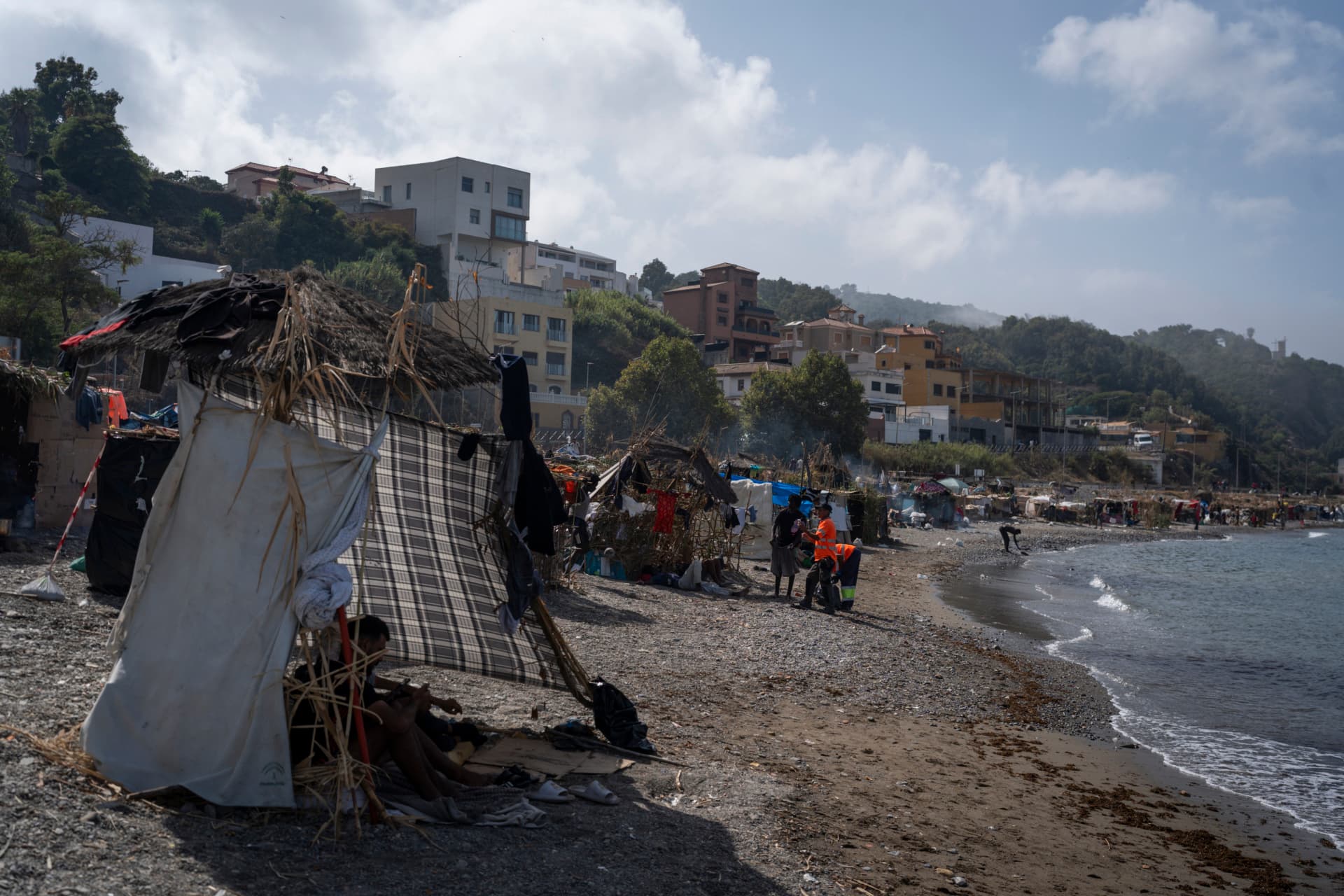
Two weeks after the crisis began, the enclave of 84,000 people is still carrying the scars.
Emergency sea barriers remain under construction along the Tarajal breakwater. The shops that were looted during the chaos remain partially closed or boarded up. The Spanish military presence in the streets — deployed in the depths of the crisis — is being gradually reduced but has not been withdrawn entirely.
The 67 people who died at the border have not been officially named in any government statement. Their families are mourning in private.
And in Madrid, Pedro Sánchez is trying to change the subject. The solar eclipse over northern Spain today has given him a temporary reprieve — a spectacular celestial event that has captured the attention of millions of Spaniards and provided a brief, beautiful distraction from the political emergency that has defined his government's August.
The eclipse will pass. Ceuta's wounds will take longer to heal.
DeSanta News will continue to follow the political and humanitarian aftermath of the Ceuta border crisis.
Subscribe to get the latest articles delivered to your inbox.
No comments yet. Be the first to share your thoughts.
World
World
World