DSN WIRESUN 11 OCT 20260422 UTC
Military / War
ANALYSISUkraine launched its largest drone attack of the entire war on Moscow on June 18, 2026.
FILED 5 MIN READ
Moscow, Russia — June 18, 2026
Ukraine launched the largest drone attack of the entire war against Moscow on Thursday — striking the Russian capital's largest oil refinery for the second time in three days, shutting down all four of the city's major airports and injuring at least 17 people as black smoke and soot-laced rain blanketed southern Moscow.
Ukraine launched its largest drone attack on Moscow in years, sparking fires, hitting a major oil refinery and forcing evacuations at the country's largest airport. Russia vowed to retaliate for the attack as black smoke billowed over the capital's southern skyline and drops of black rain mixed with soot fell from the sky.
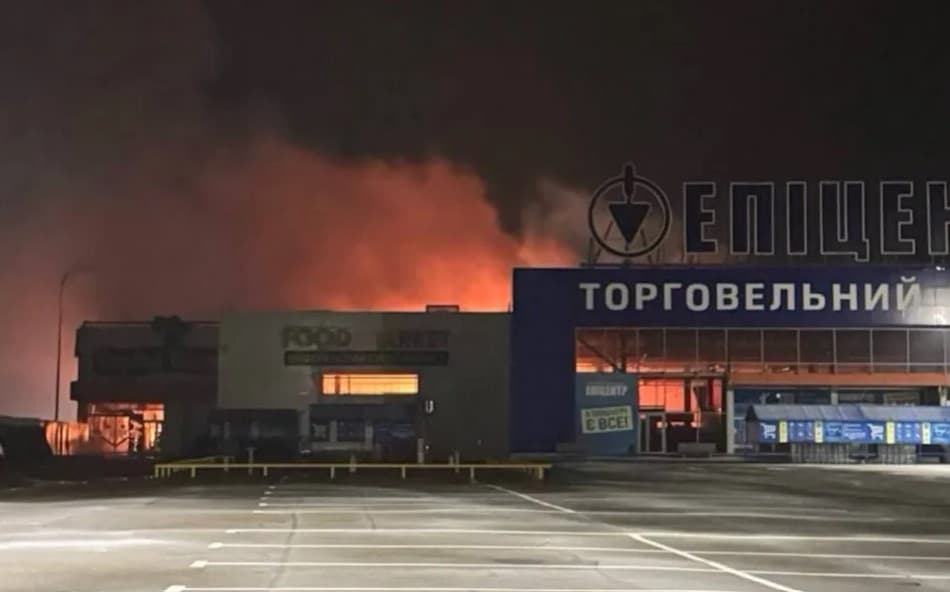
At least 17 people were wounded in the strikes, which also set a shopping centre and apartment building ablaze, authorities said.
Ukraine launched more than 550 drones at Moscow and other Russian regions in the overnight and morning attacks.
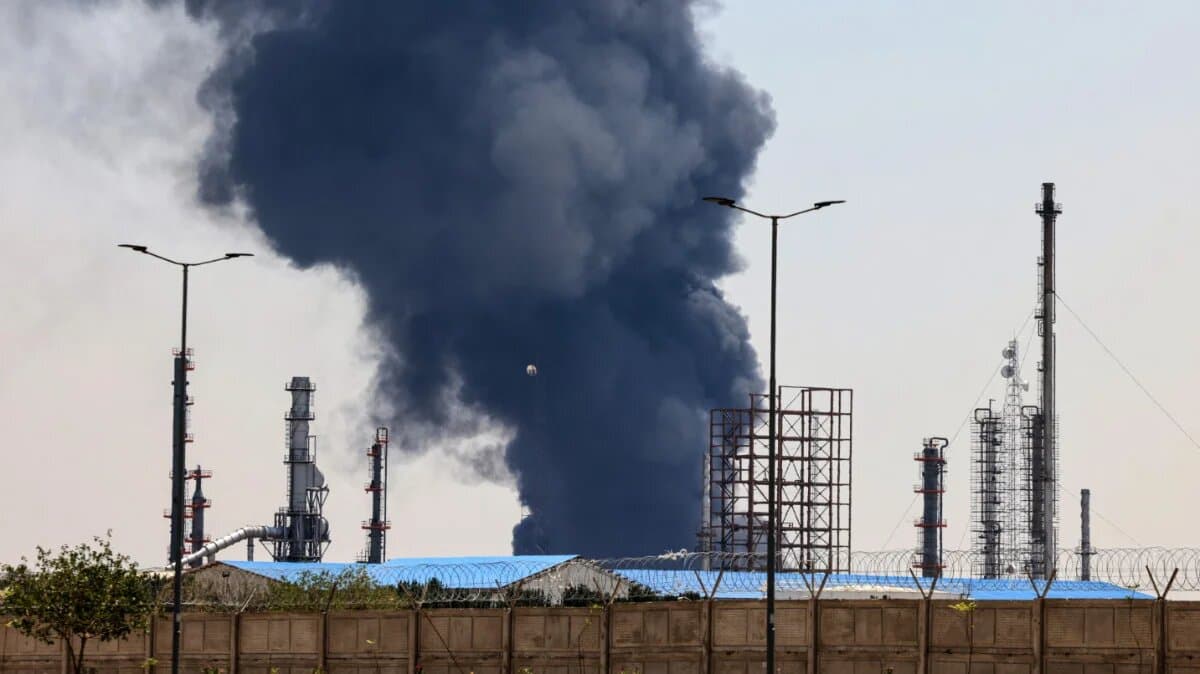
Black smoke blanketed the skies of southern Moscow on Thursday morning after Ukrainian drones struck and set fire to a major oil refinery, in what was the largest-ever attack on the Russian capital since the start of the war. Moscow Mayor Sergei Sobyanin said around 6 a.m. local time that air defense systems were "repelling a large-scale attack" and that "several drones" managed to strike the Gazprom Neft-operated refinery located about 15 kilometers southeast of central Moscow. The refinery, which supplies around a third of Moscow's gasoline and fuel, had also been attacked on Tuesday, after which it reportedly halted operations.
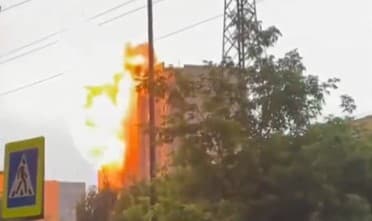
Footage geolocated by CNN showed a ground-launched projectile being fired at drones approaching the refinery, located roughly 15 kilometres from the Kremlin in the Kapotnya district, with a large explosion blowing the roof off a fuel storage tank.
Reuters reported that the refinery processed 11.6 million metric tons of crude oil in 2024, producing 2.9 million tons of gasoline and 3.2 million tons of diesel. Ukraine's General Staff stated that the refinery supplies aviation fuel to Domodedovo, Vnukovo, Sheremetyevo and Zhukovsky airports.
The Russian Transport Ministry said the city's four airports — Sheremetyevo, Vnukovo, Domodedovo and Zhukovsky — were "temporarily not accepting or dispatching flights" for flight safety reasons.
Moscow's airports were shut for hours, leading to hundreds of flight delays. The country's busiest — Sheremetyevo — announced it had evacuated passengers to "safe locations" during the barrage, before it re-opened at around 11am.
Russia's largest airline, Aeroflot, and its subsidiary Rossiya cancelled more than 170 flights to and from Moscow and delayed over 110 others.
Another drone crashed into an apartment building, while drone debris sparked a fire at a shopping centre near the capital's suburbs. One social media video showed smoke pouring from the upper floors of an apartment block, while a woman behind the camera could be heard weeping in distress.
In the wider Moscow region, a drone struck a residential building in Zhukovsky, prompting an evacuation, while debris hit private houses, a car, a fitness centre and a shopping mall whose roof caught fire, according to regional governor Andrei Vorobyov.
Vorobyov reported that 16 people were injured in the UAV attacks in the Moscow region, two of them children.
Russian air defences shot down around 180 drones on approach to the capital.
As part of the June 18 attacks, a petroleum depot in the city of Gukovo in Russia's Rostov region was also targeted. Rostov Region Governor Yuri Slyusar reported that one person had been killed and two injured in the UAV strike, with damage to a locomotive and fires at two commercial facilities. Authorities in the Belgorod border region reported that a Ukrainian UAV attack had killed a man on board a vehicle.
The attack came as Russian President Vladimir Putin hosted Southeast Asian leaders at a summit in the central city of Kazan, about 700 kilometres east of Moscow. The Russian leader was yet to comment on the strikes, despite issuing press statements through the day, though his Foreign Minister Sergei Lavrov vowed Moscow would retaliate with its own "massive" strikes on Ukraine.
While black smoke rose over his own capital and soot fell like rain from the sky, Vladimir Putin said nothing.
A woman who lives in southeastern Moscow, not far from the Gazprom Neft refinery, told The Moscow Times that she woke up around 5 a.m. to the sound of air defense shooting at drones. "I was horrified, shocked and angry. The closer this situation gets to us, the more I find myself thinking about human lives," the woman said, asking to remain anonymous.
Another Muscovite, who lives near a shopping center that was also struck on Thursday, said many people in the capital have gotten used to Ukrainian attacks after more than four years of war. "There isn't much anxiety," she said, describing the mood on the ground.
Ukrainian President Volodymyr Zelensky, calling what he termed "Ukraine's long-range sanctions" totally justified, said targets in Russia's Rostov region and Russian military targets in occupied Ukrainian territories were also struck as part of the same operation.
After more than four years of war, the line between the front and the home front in Russia is collapsing. Moscow — once insulated from the worst of the conflict — is now waking up to air raid sirens, soot-stained rain and a capital region under sustained, repeated and increasingly successful Ukrainian attack.
Russia's Foreign Minister has vowed "massive" retaliation. The question now is what that retaliation looks like — and how much further this war can escalate before something finally breaks.
DeSanta News will continue to update this story as the situation in Moscow develops.
Subscribe to get the latest articles delivered to your inbox.
No comments yet. Be the first to share your thoughts.
Military / War
Military / War
Military / War