DSN WIRESUN 11 OCT 20260421 UTC
World
ANALYSISA fast-moving wildfire near Los Gallardos in Almería, southern Spain killed at least 12 people on July 9–10, 2026
FILED 4 MIN READ
Los Gallardos, Almería, Spain — July 10, 2026
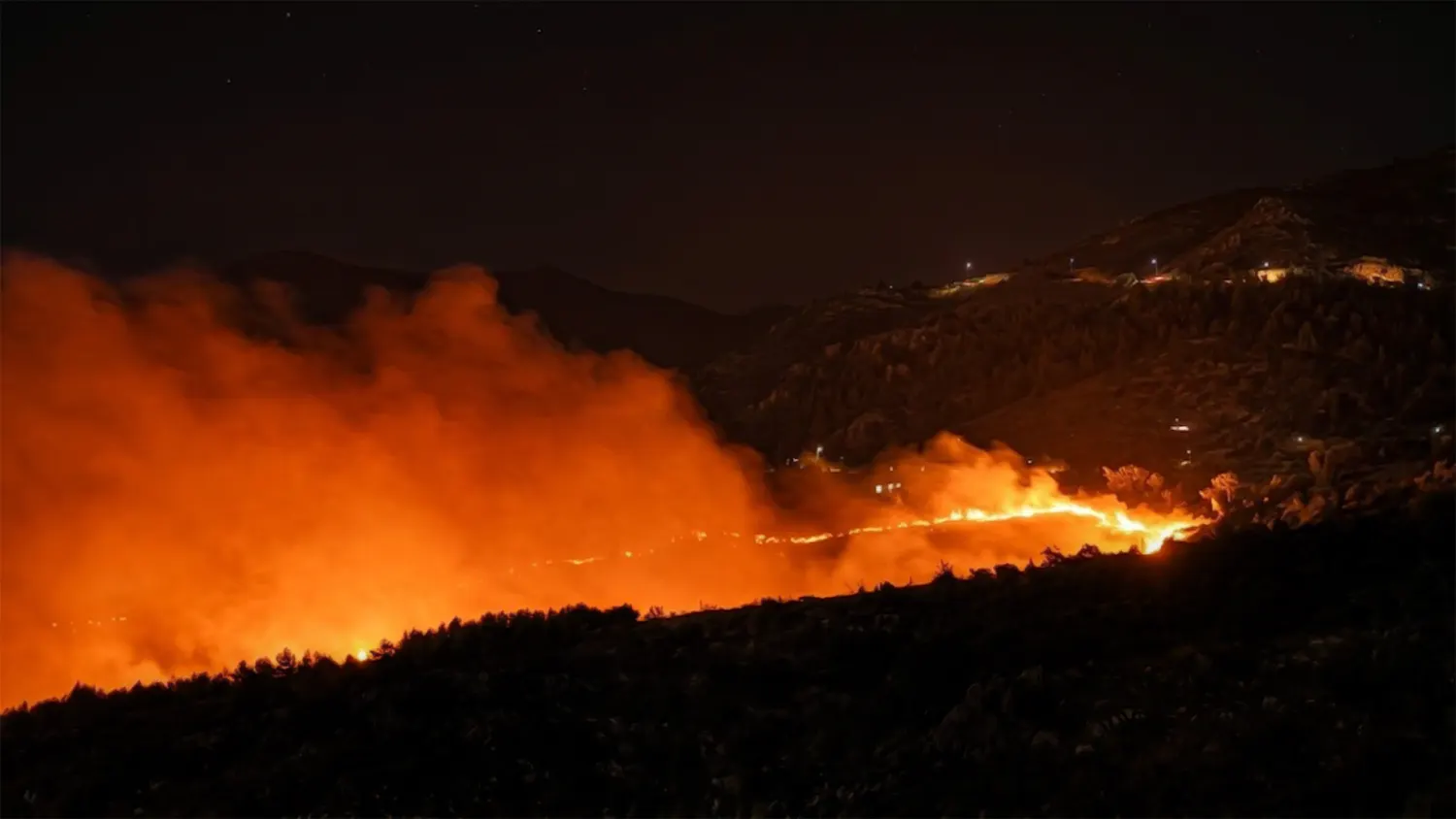
Twelve people are dead. Nineteen more are missing. Some of the victims were found still inside their cars — burned alive as they tried to flee a wildfire that swept through the hamlets and farmhouses of Almería's parched countryside with a speed and ferocity that gave no warning and offered no escape.
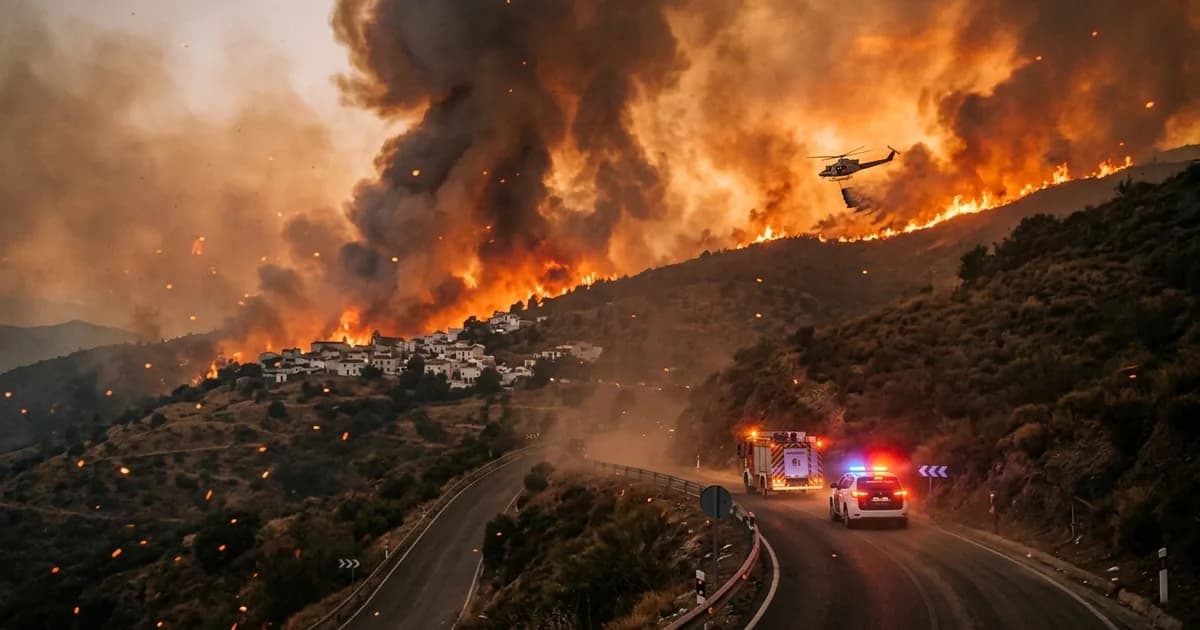
A fast-moving wildfire near Los Gallardos in Almería, southern Spain, killed at least 12 people on July 9 and 10, 2026, injured eight, and left at least 19 people missing as crews worked through steep terrain, road closures, and extreme heat.
The fire broke out near Los Gallardos on July 9 and spread rapidly through wooded and semi-arid terrain toward Bédar, where several victims were found after trying to leave the area by car or on foot.
Witnesses say the fire was caused by a downed power line, with the blaze spreading quickly to a nearby wooded area. Antas' mayor Pedro Ridao said the fire was believed to have started when a power cable came loose and fell on dry scrubland, sparking the blaze, which then spread rapidly through wooded areas around Los Gallardos, affecting farmhouses, holiday homes, and cars.
The circumstances of the deaths paint a picture of terrifying speed. Some of the victims were found inside vehicles that had been engulfed by flames. Andalusia emergency chief Antonio Sanz said residents had been instructed to shelter indoors and that the deaths appeared to have occurred when people tried to flee in vehicles.
The fire moved faster than escape. Families who got into their cars to drive away from the flames found themselves overtaken by them. The charred vehicles discovered on the roads around Los Gallardos and Bédar tell the story of people who had seconds — not minutes — to make a decision that determined whether they lived or died.
The regional government of Andalusia confirmed: "The number of people who died in the fire in Los Gallardos has risen to 12 after the confirmation of six more deaths." At least 19 people remain missing as firefighters work through the terrain.
Fanned by high temperatures, low humidity and strong winds, the wildfire spread rapidly into the neighbouring municipality of Bédar.
This event occurred during an extreme-heat period in southern Spain. AEMET reported maximum-temperature warnings for parts of Almería on July 9, including 41°C for Valle del Almanzora y Los Vélez.
In June, Spain reached its highest daily average temperature since 1950, and had days where it recorded its highest ever temperatures for that month. Temperatures as high as 42°C were forecast in some parts of the country.
WMO reported that Spain recorded its hottest June days on record on June 23 and 24, 2026, with many locations above 40°C. Copernicus Climate Change Service reported that June 2026 was the hottest June recorded for western Europe and the second-warmest June globally.
Spain's Military Emergency Unit (UME) joined firefighting efforts in Los Gallardos. Hundreds of firefighters are battling the blaze across steep and difficult terrain, with road closures hampering access to the most severely affected areas.
The fire joins a string of major wildfire incidents currently burning across southern Europe simultaneously. Hundreds of firefighters are battling major incidents in France, Portugal and Spain, with thousands forced to leave their homes.
The Los Gallardos fire did not emerge from nowhere. It is the most devastating expression of a wildfire crisis that has been building in Spain for years — accelerated by record-breaking temperatures, prolonged drought and the drying of vegetation across the Iberian Peninsula.
Last year, a record 393,000 hectares burned in Spain, according to the European Forest Fire Information System, more than six times the Spanish average for between 2006 and 2024. Climate change is driving up temperatures around the world, and Europe is the fastest warming continent, heating up twice as fast as the global average.
The combination of record June heat, a powerful summer heatwave in early July and the accumulated dryness of years of below-average rainfall has left southern Spain's landscape like a tinderbox. A single downed power line on the afternoon of July 9 was enough to ignite a fire that by the following morning had killed 12 people and left 19 more unaccounted for.
The Los Gallardos fire is one of dozens of major incidents burning across southern Europe as a powerful heat dome settled over the continent in the first week of July 2026. Portugal, France, Greece and Italy are all reporting significant wildfire activity under the same system of high pressure that has driven temperatures in Almería to 41°C.
The pattern is consistent with projections that climate scientists have been making for years: as the Mediterranean region heats up, the fire season becomes longer, more intense and more deadly. The fires of July 2026 are not an anomaly. They are a preview.
Judicial authorities have opened an investigation to determine the cause of the fire and formally identify the victims, while emergency services remain on alert as firefighting efforts continue.
Firefighters continue to battle the blaze under extreme heat. The 19 people still missing represent the most urgent priority — search teams are working through the terrain around Los Gallardos and Bédar looking for survivors and accounting for those who fled.
DeSanta News will continue to follow this story as the death toll is updated and firefighting operations continue in Almería.
Subscribe to get the latest articles delivered to your inbox.
No comments yet. Be the first to share your thoughts.
World
World
World